Temperature
The single most controllable factor. Cooler rooms generally support better sleep quality. Educational range: 65–68°F (18–20°C).
Educational guide to creating an optimal sleep environment through temperature, lighting, sound, and comfort management. Build your ideal bedroom setup.
The single most controllable factor. Cooler rooms generally support better sleep quality. Educational range: 65–68°F (18–20°C).
Darkness signals bedtime to your circadian system. Blackout strategies reduce light intrusion from windows and devices.
Inconsistent noise disrupts sleep architecture. White noise or consistent sound can mask disruptive noises.
Mattress, pillows, and bedding directly impact sleep quality. Personal preferences vary—find what suits your body.
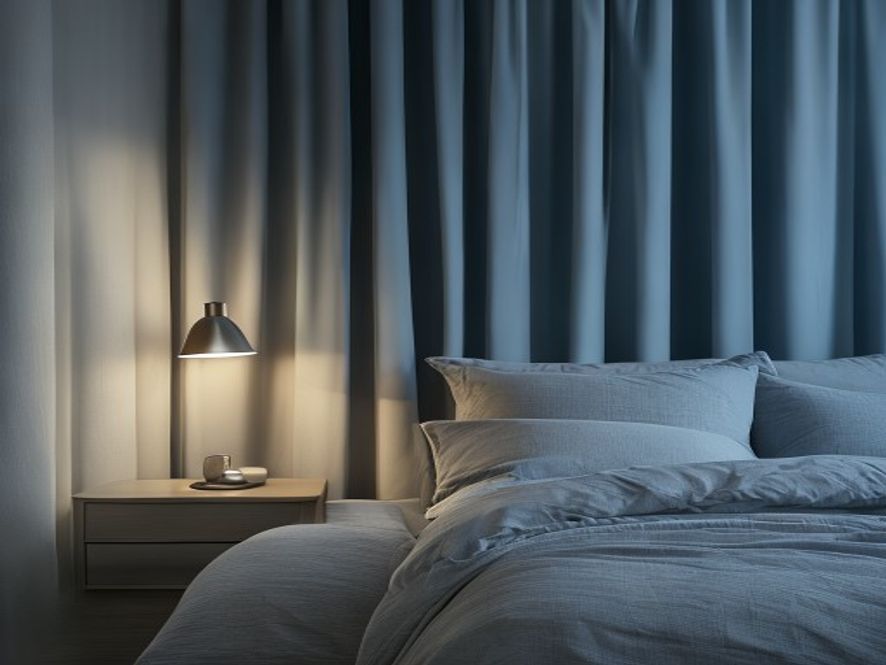
Research suggests cooler rooms support deeper sleep cycles. However, individual preferences vary significantly.
Educational guidelines:
Practical adjustments: thermostat, ceiling fan, open windows, layered bedding you can remove.
Heavy, room-darkening curtains block street lights, early morning sun, and outdoor light pollution. Essential if your bedroom faces east or is in an urban area.
Inexpensive alternative or complement to blackouts. Allows partners to control their own light preferences independently.
Remove or cover LED indicators on devices. Place phone and chargers outside bedroom if possible. Disable notification lights.
Begin reducing light 1–2 hours before bed. Dim lights in living spaces, use warm bulbs (2700K or lower), reduce screen brightness.
If you need navigation light, use red/amber wavelengths which are less disruptive than blue or white light.
If possible, position your bed away from windows. If that's not feasible, prioritize blackout solutions.
Three approaches to managing bedroom acoustics.
Eliminate disruptions:
Cover disruptive noise:
| Element | Considerations | Testing Approach |
|---|---|---|
| Mattress | Firmness varies by body type, weight, sleeping position | Test for 2+ weeks. Hybrid, memory foam, or innerspring—find your preference |
| Pillows | Height and support affect neck alignment and comfort | Side sleepers usually need firmer; back/stomach sleepers need lower height |
| Bedding Material | Cotton, linen, bamboo all affect temperature regulation and comfort | Cotton works well for most climates. Test seasonal adjustments |
| Blanket Weight | Weighted blankets popular but not for everyone | Try before buying. Some find them helpful; others find them restrictive |
| Bed Frame/Base | Affects mattress support and air circulation underneath | Slatted bases vs. solid platforms—both work; ventilation matters in humid climates |
A visually calm space supports mental calm. Clear surfaces, organized storage, minimal decoration.
Soft neutrals, cool blues, and muted greens are associated with calm. Avoid bright reds or strong stimulating colours.
Some find lavender or other mild scents helpful; others find any scent disruptive. Use cautiously.
Using your bed only for sleep (and intimacy) creates a strong association. Avoid working, eating, or screen time in bed.
If devices must stay in the room, place them away from bed. Turn off notifications. Disable lights or cover them.
Get personalized bedroom setup guidance through our consultation programs.
Book a Session